
Lead program
ATL-001
First-in-class oral pharmacological chaperone for Congenital Erythropoietic Porphyria (CEP). Phase 1/2 ongoing in the US.
CEP is an ultra-rare, life-threatening disease with no approved treatments.
- FDA Fast Track · 2025
- Orphan Drug Designation · US 2018
- Orphan Medicinal Product · EU 2018
- $2.5M FDA OOPD grant
- Indication
- Congenital Erythropoietic Porphyria
- Stage
- Phase 1/2, ongoing
- Route
- Oral solution
- Prevalence
- <1 in 1,000,000
- Exclusivity to
- 2042
The disease
Congenital Erythropoietic Porphyria (CEP) is caused by a deficiency in uroporphyrinogen III synthase (UROIIIS), the fourth enzyme in the heme biosynthesis pathway. Loss of UROIIIS function leads to a massive accumulation of type I porphyrins, mainly in the bone marrow, that damage tissues throughout the body.
The disease usually presents in early childhood with red-colored urine and extreme skin photosensitivity. Sun exposure triggers bullous, mutilating skin lesions that progress to severe scarring and the loss of facial features and fingers. Patients also experience hemolytic anemia, splenomegaly, and bone fragility, with life expectancy reduced to around 65 years. The FDA classifies CEP as a life-threatening disease.
CEP is ultra-rare, affecting fewer than 1 in 1,000,000 people regardless of sex or ethnicity. Most missense variants in the UROS gene reported in patients with CEP destabilize the enzyme, impairing its folding and stability and increasing the enzyme’s kinetic aggregation rate.
No approved therapy exists for CEP. Current management is limited to photoprotection, antibiotic treatment for lesion infections, blood transfusions, and in some cases splenectomy or bone marrow transplantation, the latter with a poor risk-benefit ratio in this patient population.

Mechanism of action
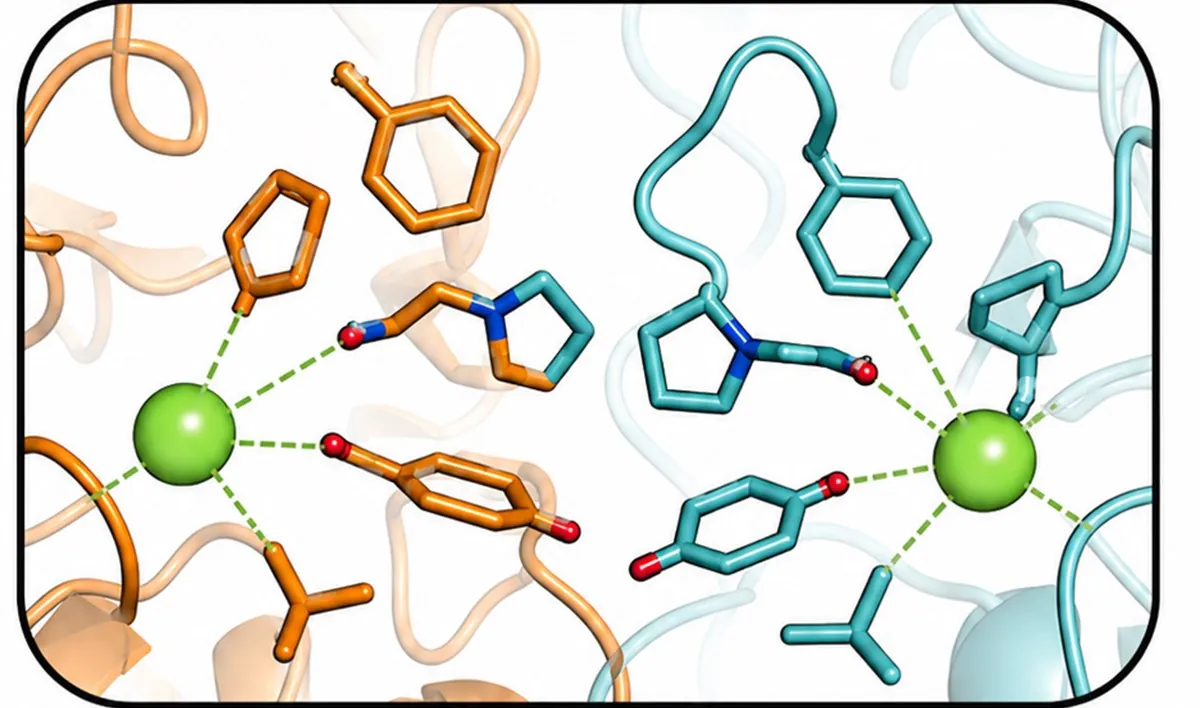
ATL-001 restores UROIIIS function through a dual mechanism. As a pharmacological chaperone, it stabilizes the misfolded enzyme and recovers part of its catalytic activity. As a moderate iron chelator, it also reduces iron-dependent porphyrin production upstream in the heme pathway. Together, these mechanisms reduce the accumulation of toxic type I porphyrins, the molecular driver of the disease’s skin and hematological manifestations.
The drug product
ATL-001 is an oral solution of ciclopirox, a topical antifungal approved decades ago whose systemic use has been limited by gastrointestinal toxicity linked to poor gastric absorption. ATLAS’s proprietary oral formulation removes this limitation without altering the compound’s bioavailability or pharmacokinetics, enabling, for the first time, safe chronic oral exposure to ciclopirox. The formulation is covered by a granted composition-of-matter patent (priority December 2021) and is recognized as a first-in-class therapeutic approach for CEP.
Preclinical evidence
ATL-001 has shown efficacy in a proprietary CEP animal model, reducing the accumulation of toxic porphyrins and improving disease-associated skin lesions.
Clinical program
ATL-001 completed in April 2024 a Phase 1, double-blind, randomized, placebo-controlled study in 42 healthy volunteers, demonstrating safety and tolerability at the oral doses required for chronic treatment. The study is registered at ClinicalTrials.gov (NCT05647343).
The ongoing Phase 1/2 study evaluates the safety and efficacy of ATL-001 in adult patients with CEP in the US, in collaboration with Dr. Robert J. Desnick (Icahn School of Medicine at Mount Sinai), Dr. Angelika Erwin (Cleveland Clinic) and Dr. Hetanshi Naik (Stanford University). The study is registered at ClinicalTrials.gov (NCT07024316).
Regulatory milestones
- 2018 Orphan Medicinal Product designation in the EU.
- 2018 Orphan Drug Designation in the US.
- 2025 FDA Fast Track Designation.
- 2025 $2.5M grant from the FDA’s Office of Orphan Products Development (OOPD) to support the ongoing clinical trial.
- 2025 Selected to participate in the Rare Disease Endpoint Advancement Pilot Program.
- 2025 Externally-Led Patient-Focused Drug Development meeting organized by the FDA.
- Both initiatives focused on defining clinical endpoints for CEP together with regulators and patient advocates.
IP & exclusivity
ATL-001 benefits from layered exclusivity protection. Orphan designation in the EU and the US provides a period of regulatory market exclusivity from approval, independent of patent protection. Method-of-use patents have been granted in the US and EU, with protection extending to 2037 and 2038 respectively. A composition-of-matter patent covering the oral formulation has been granted in the EU and is under review in the US, Japan, and Canada, with protection through 2042. Assuming approval between 2027 and 2030, no generic or similar formulation could enter the market before 2042.
Interested in licensing or co-developing ATL-001?
Contact us to discuss the program in detail.