Science
Platform
Chassys®: technical differentiation
Atlas Molecular Pharma’s drug discovery is built on Chassys®, a proprietary NMR-based platform that identifies and validates pharmacological chaperones for proteins destabilized by disease-causing mutations.
NMR is used at every stage of the process, from initial target characterization to lead optimization. It allows direct observation of ligand-protein interactions in solution, across a wide range of binding affinities, under conditions that approximate the cellular environment.
Compounds advance only after passing two independent tests: confirmed binding to the target protein, and functional rescue of its stability or activity in cell-based assays. This dual requirement reduces the number of false positives that reach later, more expensive stages of development.
The platform also supports identification of allosteric binding sites, sites distinct from a protein’s active site. Chaperones that bind there can restore protein stability without blocking the protein’s normal function, an approach with lower risk of off-target toxicity than active-site inhibitors.
Chassys has been applied across two programs to date: ATL-001 for Congenital Erythropoietic Porphyria and ATL-002 for Tyrosinemia type I.
Modalities
Why pharmacological chaperones
Monogenic diseases caused by protein misfolding can be addressed at three levels: the gene, the RNA transcript, or the protein itself.
DNA
Gene therapy and gene editing
Gene therapy and gene editing intervene at the DNA level and can in principle be curative, but manufacturing costs are high, and for diseases affecting very small patient populations, the required R&D investment is difficult to justify against the expected return.
RNA
RNA-based approaches
RNA-based approaches, including siRNA, antisense oligonucleotides and mRNA-coding therapies, intervene at the transcript level. A small number have reached the market, but manufacturing remains complex and none can be administered orally.
Protein
Enzyme replacement therapy
Enzyme replacement therapy intervenes at the protein level by supplying the missing or defective protein directly. It has worked for several diseases, but production costs, immunogenicity, pharmacokinetics and the need for repeat infusions limit its suitability for ultra-rare conditions, where small patient populations make this cost structure hard to sustain.
Protein
Pharmacological chaperones
Pharmacological chaperones also act at the protein level, but by binding to and stabilizing a misfolded protein that retains partial function. Atlas develops chaperones through both drug repurposing and new chemical entities. As small molecules, they can be manufactured at low cost and administered orally. Where repurposing applies, the regulatory pathway is shorter, improving the return on a given R&D investment.
Process
Drug discovery process
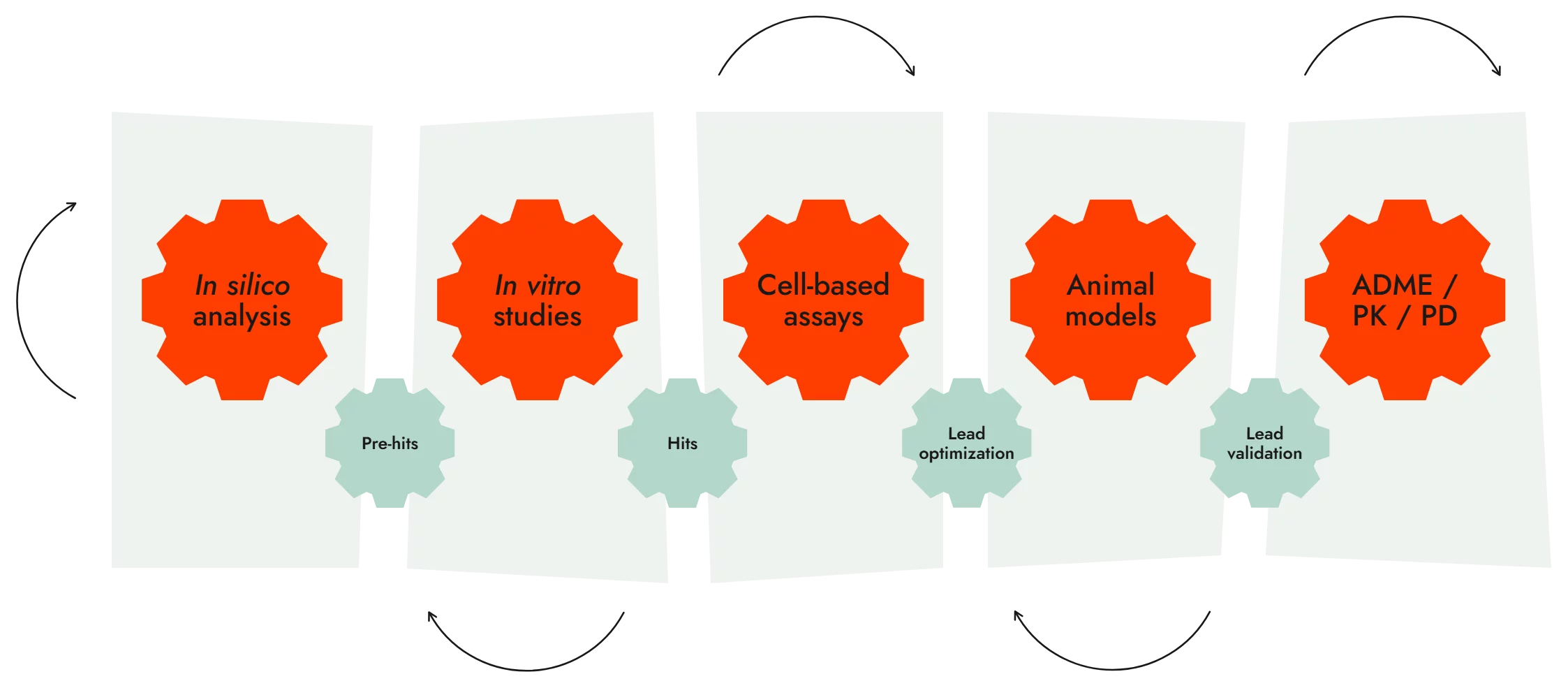
Atlas’s discovery process begins with in silico analysis: target characterization, identification of candidate allosteric binding sites, and screening of the compound library. Pre-hit compounds are tested through functional and biophysical assays using Chassys, and only those confirming both target binding and functional rescue advance as validated hits.
Validated hits undergo further biophysical characterization, including binding and stability analysis, before moving into animal model development. Lead compounds are then characterized for absorption, distribution, metabolism and excretion, generating a validated lead ready for clinical development.